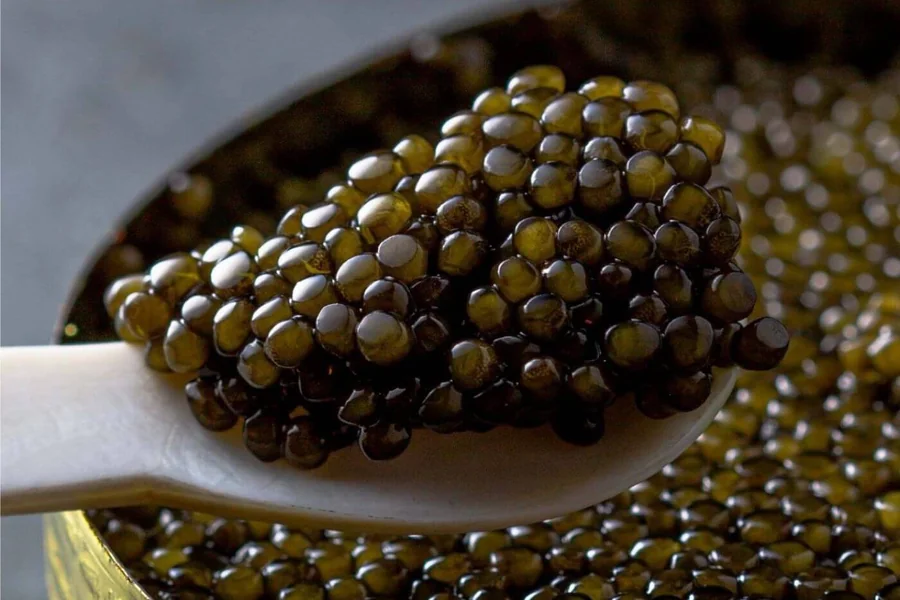
Kaluga caviar has steadily gained a reputation as one of the most luxurious and sought-after delicacies in the world of fine dining. Often compared to Beluga caviar, Kaluga caviar stands out not only for its size and flavor but also for its sustainable production methods. To truly appreciate why this golden-hued delicacy has captured the attention of chefs, gourmets, and collectors alike, it’s essential to understand its origins, characteristics, and cultural significance.
Origins of Kaluga Caviar
Kaluga caviar comes from the Kaluga sturgeon (Huso dauricus), a massive freshwater fish native to the Amur River basin, which stretches across parts of China and Russia. This sturgeon is closely related to the Beluga sturgeon, the source of the famous Beluga caviar, which explains the similarities in texture and taste. Kaluga sturgeon are an ancient species, with a lineage dating back millions of years, and they can grow to impressive sizes—sometimes exceeding 1,500 pounds in the wild.
While traditional Beluga caviar was historically harvested from wild sturgeon in the Caspian Sea, overfishing and environmental changes have drastically reduced their populations. Kaluga caviar, on the other hand, has benefitted from modern aquaculture techniques. Sustainable farms, particularly in China and Europe, have allowed Kaluga sturgeon to be raised in controlled environments, ensuring high-quality caviar while protecting wild populations.
Distinctive Characteristics
Kaluga caviar is renowned for its large, glossy eggs, which range from 3 to 4 millimeters in diameter. The color varies from dark gray to golden brown, often with a subtle sheen that enhances its visual appeal. These eggs have a delicate, firm texture that “pops” gently on the palate, releasing a rich, buttery flavor. Unlike some other caviars that can taste overly fishy or salty, Kaluga caviar offers a creamy, nutty profile with a slight mineral undertone, making it versatile for pairing with a variety of dishes.
One of the reasons Kaluga caviar is often favored over other types is its consistency. While Beluga caviar can sometimes have uneven sizes and textures due to overfishing and natural scarcity, farm-raised Kaluga sturgeon allow producers to maintain uniformity, which is essential for high-end culinary presentations.
Culinary Appeal
The culinary world has embraced Kaluga caviar for its balance of luxury and flavor. Chefs use it to elevate a wide range of dishes, from classic blinis with crème fraîche to more contemporary creations like sushi or delicate seafood platters. Its buttery, smooth taste pairs exceptionally well with champagne or vodka, and its visual appeal adds sophistication to any dish.
Unlike some gourmet ingredients that can be overpowering, Kaluga caviar’s subtle yet complex flavor makes it a favorite among both traditionalists and modern culinary innovators. Its ability to enhance a dish without overwhelming it has contributed to its growing popularity in fine dining restaurants around the globe.
The Role of Sustainability
In recent years, the popularity of Kaluga caviar has also been fueled by an increasing awareness of sustainability. Many consumers are concerned about the environmental impact of caviar harvesting, and Kaluga caviar offers a responsible alternative. Farm-raised Kaluga sturgeon are carefully monitored, and advanced aquaculture methods mimic their natural environment, allowing the fish to grow healthily without harming wild populations.
This sustainable approach not only preserves the species but also ensures a consistent supply of high-quality caviar. For environmentally conscious food enthusiasts, Kaluga caviar represents a rare combination of indulgence and responsibility.
Why It’s So Popular
Several factors contribute to the growing popularity of Kaluga caviar:
- Exquisite Flavor and Texture – Its creamy, buttery profile and large, delicate eggs make it a favorite for gourmets and chefs alike.
- Visual Appeal – The shimmering, golden-gray eggs add elegance to any presentation.
- Sustainable Sourcing – Ethical aquaculture practices appeal to environmentally conscious consumers.
- Versatility – Kaluga caviar can enhance both traditional and modern culinary creations.
- Accessibility Compared to Beluga – While still expensive, farm-raised Kaluga caviar is generally more available than wild Beluga caviar, making it slightly more attainable for connoisseurs.
Conclusion
Kaluga caviar represents the pinnacle of luxury in the culinary world, combining exquisite taste, elegant appearance, and ethical sourcing. Its buttery flavor, large glossy eggs, and sustainable production methods have made it a favorite among chefs, food enthusiasts, and collectors alike. Whether served atop a delicate blini, paired with champagne, or enjoyed straight from the tin, Kaluga caviar offers a unique experience that embodies indulgence and sophistication. As more people discover its qualities, it is likely to continue cementing its reputation as one of the finest caviars available today.